
Benefits of Mobile Payments for Small Business
Discover how merchant services solutions support digital payments for businesses by streamlining transactions, improving cash flow, and enhancing customer convenience in an increasingly cashless world.
Key takeaways:
- Why mobile payments have become essential for small businesses and how they meet growing consumer demand.
- Five major benefits of accepting mobile payments, from faster checkout and improved small business payment processing.
- How contactless payment solutions enhance customer loyalty programs and create new engagement opportunities.
- Best practices for security and convenience when implementing mobile payment technology.
Mobile payment solutions have evolved from high-tech convenience into a standard expectation for modern consumers. Paying with a digital wallet or completing a transaction without waiting in line is no longer novelty - it’s a core part of today’s shopping experience.
Mobile payments are widely adopted and continue to grow globally. Industry research shows that digital wallets account for a significant share of transaction value and are projected to keep expanding in the coming years. For small businesses, this trend isn’t just about meeting customer demand, it’s about unlocking advantages like improved efficiency, enhanced security, and even new revenue opportunities.
What are mobile payments?
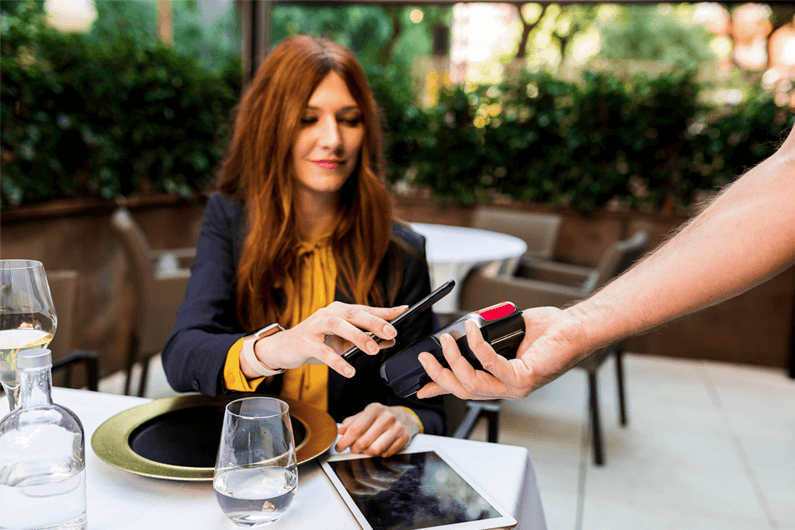
Mobile payments refer to the use of a mobile device to process a transaction. They encompass both how customers pay for products and services and how a business accepts those payments. For instance, mobile payments include digital wallets, allowing customers to make payments via smartphones.
Banks such as Fifth Third make this easy by enabling customers to load their debit or credit card into their preferred digital wallet, such as Apple Pay, Google Pay, and Samsung Pay. Fifth Third’s online and mobile banking services add even more convenience by allowing customers to monitor their transactions and even pay their bills from their mobile devices.
Mobile payments also include mobile point-of-sale (POS) systems, which allow businesses to accept payment via a phone or handheld device. With a combination of hardware and software, this technology enables employees to accept payments from anywhere. There is no need for a cash register or extended wait times to make purchases.
The benefits of mobile payments
What are the benefits of contactless payments? Mobile payments make life easier for customers, but they’re not the only ones that benefit. Small businesses can also reap the rewards that mobile payments provide. Here are five ways that mobile payments can help your company succeed:
1. How do mobile payments accelerate the checkout process?
Few things can tank sales faster than long lines and cumbersome checkout processes. Expanding the number of payment methods you accept to include mobile payments is one way to speed up your checkout process. Fifth Third’s Merchant Services help ensure that you can receive and process mobile payments more quickly and securely. Mobile POS systems add another level of efficiency, allowing employees to complete transactions on the go—whether that’s on the floor of a store or even in the field.
2. Why should businesses enable contactless payments?
Contactless payments took off during the pandemic as businesses and customers sought ways to minimize physical contacts. Continuing that growth beyond pandemic-era usage, offering convenience, speed, and ease. Within the U.S., contactless transactions make up 25% of all card payments, with approximately 17.9 billion tap-to-pay transactions in 2023. Globally, contactless transaction values are projected to reach $10 trillion by 2027, reflecting strong ongoing growth.
3. How can mobile payments elevate your loyalty program?
Mobile payment technology gives businesses the opportunity to link customer rewards and incentives to their digital wallet. Many retailers are providing rewards specifically to customers who use the brand’s digital wallet to make purchases. Integrating loyalty programs with mobile payment apps can give your business unique insights into your customers, thanks to the available data and create new ways to increase customer engagement and purchases.
4. How do mobile payments enhance payment security?
Mobile payments provide multiple layers of security for customers and businesses. First, digital wallets encrypt individual credit card information, meaning that customer credit card data isn’t exposed or available if a system was ever breached. These security features are usually part of the electronic payment system for your small business. In addition, most digital wallets also require a user passcode or facial recognition to make a purchase.
5. How can mobile payments improve business revenue?
When implemented, these benefits can lead to increased revenue for businesses that accept mobile payments. They can help you retain your current customers, especially those who prefer digital wallets as their primary form of payment and those who prioritize contactless payments. It can also help attract new customers who appreciate mobile payments’ efficiency and convenience.
Why are mobile payments becoming essential for businesses?
The demand for mobile payments means they’re no longer a nice-to-have for your small business. Instead, mobile payments are becoming critical to your future success. Implement mobile payments for your customers, and you’ll meet their payment needs and experience benefits that give your business a boost.
Mobile payments can help you work faster, serve customers better, and keep your business moving. Take the next step by opening a Fifth Third Momentum® Checking Account or adding your Fifth Third cards to your preferred digital wallet.
Subject to Digital Services User Agreement terms and conditions.